
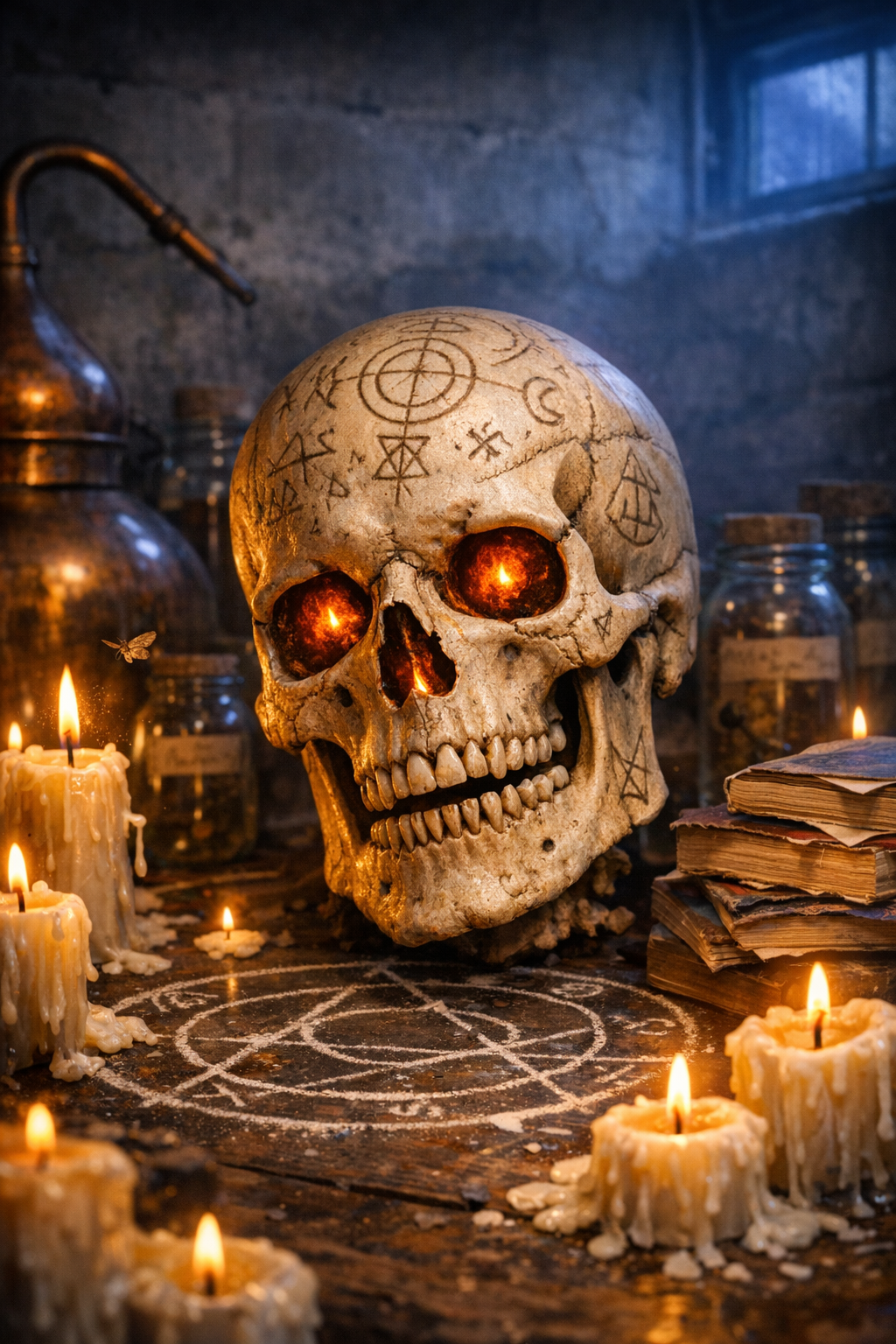
Bob The Skull
Bob
Spoiler-light. Bob's role across the book is consistent and his backstory is only lightly touched on in this novel; there is no full-spoiler section.
In a sentence
An ancient air spirit of intellect anchored to a rune-carved human skull on Harry Dresden's workbench, who functions as Harry's walking grimoire, lab assistant, and the comic engine of half the magical exposition in the book.
Who he is in the story
Bob is bound to a skull and the skull is bound to Harry. The arrangement is centuries older than Harry and was inherited from Harry's mentor; Harry "owns" the skull in a way that does not feel comfortable to either of them and that the series will examine more directly in later books. In Storm Front, Bob is simply the best friend a chronically broke practical wizard could ask for: a near-omniscient magical-theory consultant who works for trashy romance novels and the occasional permission to "take the skull out for a walk."
When Harry needs to know how a particular thaumaturgical effect would be constructed — say, how to murder someone by tearing their heart out through their chest from a distance — Bob is the one who works it out on the bench while Harry cleans glassware. The forensic model of the killer's method in this book is Bob's. The strategy for the final confrontation is largely Bob's. The reminder that lust and storms are compatible energy sources for nasty workings is, of course, Bob's.
What he's like
Bawdy, brilliant, and cheerfully amoral about magical theory — he loves the puzzle and trusts Harry to handle the ethics. He talks fast, uses precise technical vocabulary, and complains constantly about how few books Harry has bought him this month. He is theatrical when bored and clinical when something dangerous is on the bench. When the danger gets close enough, he becomes very, very serious and very, very useful, very quickly.
The ember-orange "eye-fires" in the skull's empty sockets pulse with his moods. They flicker when he's amused, burn steadily when he's working, and dim almost out when Harry actually does something that disappoints him — which is rare, because Harry trusts Bob's read on people, including Harry himself.
What he wants
Books. Romance novels specifically. Occasional, supervised excursions out of the skull (Harry mostly refuses). To not be repossessed by someone worse than Harry — which, given who used to own the skull, is a meaningful concern. To watch Harry do magic well, because Bob, in his way, is proud of him.
What he fears / hides
The fact that he is older and older-souled than he lets on, and that the entity Harry calls "Bob" is a constructed personality stable enough to be friendly with — not the only personality the skull has ever held. The book lets that sit lightly, and Bob does not volunteer the heavier facts of his existence. Storm Front gives you the friend; the series will eventually give you the rest.
Key relationships
- Harry Dresden — bound consultant, collaborator, comic foil. Harry talks to Bob more than he talks to anyone except Murphy.
- The skull itself — yes, it's a relationship. Bob and the skull are not the same thing, and the book lets you sense the seam without explaining it.
- Toot-Toot — Bob heckles cheerfully whenever the dewdrop faerie shows up in the lab. The two of them are friends-of-Harry, not friends with each other.
What he looks like
A life-size adult human skull, the bone aged to a warm ivory yellow, the surface lightly etched with runes and concentric circles. The mandible is intact and articulated and occasionally opens when he speaks. The empty eye-sockets and the nasal cavity glow with soft ember-orange light when he is awake — warm enough to read by in the basement at night.
He sits on a wooden workbench surrounded by guttering candles, a tarnished copper alembic, mason jars of dried ingredients on masking-tape labels, dog-eared romance paperbacks stacked beside him as "payment," and a chalked summoning circle scuffed onto the bench surface from a year of use. The skull does not move on its own, but it is somehow always angled exactly toward whoever is talking, which is unsettling once you notice it.
For your book club
- Harry treats Bob as a friend; the book quietly insists Bob is also property. How does that tension play in the scenes where Harry threatens to take the skull's "privileges" away?
- Bob is the source of most of the book's magical exposition. Is the choice to put that information in a comic, bawdy voice good craft, a tone problem, or both?
- "Hit him first" is Bob's advice for the climactic fight. What does Harry do with that advice and how does the book judge the difference between what Bob recommends and what Harry chooses?
- The skull's history is a one-line mystery in this book. Does it work as a setup for later novels, or does it leave too much off the page here?
Aliases
The following names and references in the book all point to this character. Use any of these as link anchors back to this page.
- Bob (canonical — the most common form)
- Bob the Skull
- the skull