
The Dresden Files — Reading Guide

The Dresden Files — Reading Guide
Spoiler-light. Premise of each book only — no twists, no ending beats. Safe before you've read book one.
What the series actually is
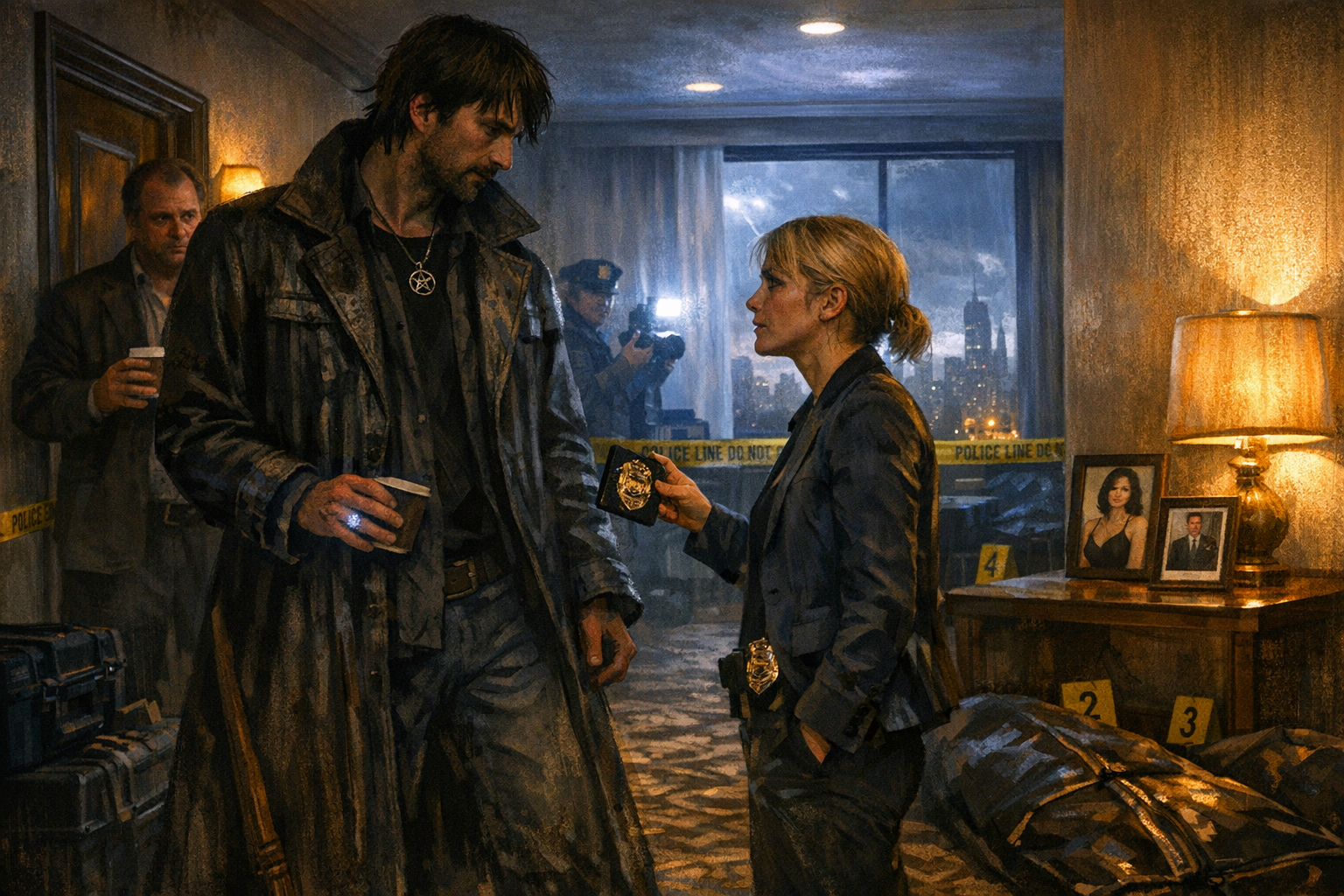
Imagine the wisecracking PI from a Raymond Chandler novel — beat-up trench coat, perpetually broke, sharper tongue than judgment — except he's six-foot-nine, a real wizard, and his clients include the Chicago Police Department, vampires, the Faerie courts, and (very occasionally) the Devil. Welcome to The Dresden Files.
Harry Blackstone Copperfield Dresden is Chicago's only openly practicing professional wizard. He's listed in the Yellow Pages under "Wizards." He consults for the CPD's Special Investigations unit — the squad that catches anything that doesn't fit on a normal case file. He runs cases out of a fifth-floor walk-up, drives a battered Volkswagen Beetle named the Blue Beetle, lives in a basement apartment with a 30-pound housecat and a smart-mouthed spirit who lives in a human skull, and once a book or so he tries to save Chicago from something that wants to eat it.
That's the elevator pitch. What the series becomes — across 17 novels and counting — is bigger than that: a long, slow-burn epic about a man who chose to stand between his city and the monsters and what that choice costs him over twenty in-universe years.
How to read it
Publication order. Always. The Dresden Files is one continuous story with a slowly tightening braid, and reading out of order spoils stakes that took years to build.
| # | Title | Year | What it is (no spoilers) |
|---|---|---|---|
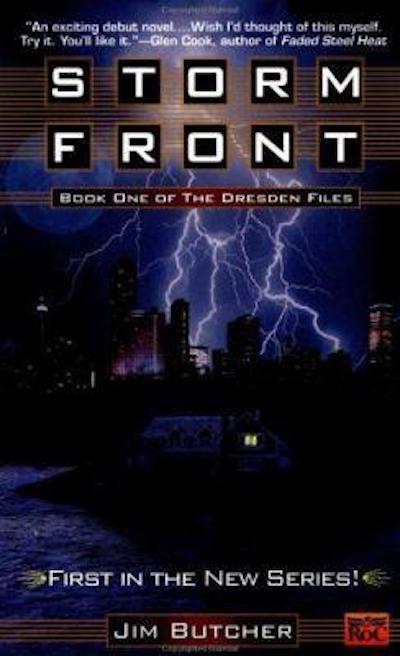
| 1 | Storm Front | 2000 | The introduction. Wizard PI, double murder, Chicago noir. |
| 2 | Fool Moon | 2001 | Werewolves. Five different flavors of them, in fact. |
| 3 | Grave Peril | 2001 | Ghosts, the Red Court of vampires, and the first real escalation. |
| 4 | Summer Knight | 2002 | The Faerie Courts step on stage. The series' world doubles in size. |
| 5 | Death Masks | 2003 | Holy relics, fallen angels, and the Knights of the Cross. |
| 6 | Blood Rites | 2004 | The White Court of vampires, and a job on a porn-movie set. Yes, really. |
| 7 | Dead Beat | 2005 | Necromancers in Chicago at Halloween. The first all-timer. |
| 8 | Proven Guilty | 2006 | A horror-movie monster case that drags the Wardens back into Harry's life. |
| 9 | White Night | 2007 | Someone is killing minor practitioners. Harry's apprentice arc deepens. |
| 10 | Small Favor | 2008 | A favor owed comes due. Mab calls. |
| 11 | Turn Coat | 2009 | Internal war inside the White Council itself. |
| 12 | Changes | 2010 | The pivot point of the series. Everything before this is "early Dresden." |
| 13 | Ghost Story | 2011 | The fallout of Changes, told from an unusual vantage. |
| 14 | Cold Days | 2012 | The hardest reset Harry has ever survived. |
| 15 | Skin Game | 2014 | A heist. A heist with Nicodemus. That sentence should worry you. |
| 16 | Peace Talks | 2020 | A supernatural diplomatic summit goes about as well as you'd expect. |
| 17 | Battle Ground | 2020 | The direct continuation of Peace Talks. The siege of Chicago. |
| 18 | Twelve Months | forthcoming | The next novel. Not yet released. |
Books 1–6 are often called the early arc — mostly self-contained urban-fantasy cases that quietly seed the long plot. Book 7 (Dead Beat) is where most readers say the series locks in. Changes (book 12) splits the series in half; everything after it is the late arc and is appreciably darker and weightier.
There are also two collections of short stories — Side Jobs (2010) and Brief Cases (2018) — and a third on the way. They fit between novels chronologically and are listed in the front matter of each collection. Skippable on a first read, beloved on a reread.
The faces you follow across the series
- Harry Dresden — the wizard PI. Narrator of every book. Stubborn, chivalrous, broke, funny, and increasingly dangerous as the series goes on.
- Karrin Murphy — Lieutenant of CPD Special Investigations. Five-foot-three of fearless cop. Harry's most important relationship across the entire series.
- Bob — air spirit of intellect, anchored to a rune-carved human skull on Harry's lab bench. Bawdy, brilliant, and the comic engine of half the books.
- Mister — Harry's 30-pound battle-scarred housecat. Yes, he counts.
- Susan Rodriguez — reporter at The Arcane. First a love interest, later something more complicated.
- Michael Carpenter — Knight of the Cross, carpenter by trade, the moral compass of the series. Joins in book three.
- Thomas Raith — vampire of the White Court. Joins in book three. Becomes essential.
- Gentleman Johnny Marcone — Chicago's crime lord. Civilized, lethal, and a recurring power.
- Mab, Queen of Air and Darkness — Winter Court of Faerie. Becomes massively important from book four onward.
- The White Council — the world's wizards, governed by ancient laws Harry keeps almost breaking.
You'll meet many more — Charity Carpenter, Molly, Butters, Sanya, Lara Raith, Nicodemus, the Archive — but those above are the spine.
What it feels like to read
This is urban fantasy written by someone who loves both The Big Sleep and Dungeons & Dragons and refuses to pick. First person, present-tense problem-solving, deadpan one-liners, frequent property damage. The genre touchstones are Jim Butcher's own (he has openly cited the influence of Glen Cook's Garrett, P.I. series, Robert B. Parker's Spenser, and his own years of playing tabletop RPGs).
Early books are paced like cases — one mystery, one antagonist, one big magical setpiece. As the series matures, those cases reveal themselves to have been part of a much longer conspiracy, and the books get longer, weirder, and more emotionally costly. Readers who try and bounce off Storm Front are often happily surprised by how the series grows up around its hero.
Tonally: funny, then increasingly serious. Several books in the second half include heavy material — torture, addiction, sexual violence (always off-page, always with consequence), war crimes, grief that doesn't resolve. Harry's wisecracks never stop, but the cost of being Harry climbs.
Major arcs (spoiler-safe)
- The Wizard PI casebook (Books 1–6). One job at a time. The world expands. Stakes climb.
- The Black Council mystery (begins in earnest in Dead Beat). Someone is moving pieces against the supernatural establishment, and Harry has been a pawn in that game longer than he realized.
- The Red Court war (Books 3–12). A slow-rolling cold-then-hot war with one of the supernatural world's great powers.
- The Outsiders (introduced quietly, escalating across the series). Something worse than the Red Court waits at the edge of reality.
- Harry's growth as a person (the entire series). The man at the end of Battle Ground is not the man who answered the phone in Storm Front.
Who this series is for
Readers who like:
- First-person noir voice with sincere chivalry under the smart-ass surface
- Modern-day Chicago as a fully developed magical city
- Cases that get bigger, weirder, and more personal as the series goes on
- A protagonist who actually grows and pays for his choices over twenty in-universe years
- Banter, friendship, and found family at the center of everything
You should know going in: the early books are deliberately pulpier than the later ones. Some readers hand-wave the first two as "training wheels" and call book three the real start. We disagree — Storm Front sets the template for everything that comes, and it's the best place to meet Harry Dresden as he was before the world started taking pieces of him.
If you liked this, read next
Placeholder — to be filled in with read-alikes the Page Posse community keeps recommending after the Dresden Files. Likely candidates: Glen Cook's Garrett P.I. (the explicit inspiration), Ben Aaronovitch's Rivers of London, Patricia Briggs's Mercy Thompson, Kevin Hearne's Iron Druid Chronicles, Daniel O'Malley's Rook Files.