Spell or High Water
Scott Meyer
Magic 2.0, Book 2
Browse chapters below. Sign in anytime to save your reading progress.
Chapters
Dive deeper into the book
Themes unlock after you finish the whole book — nothing spoiled early.
Sign in to save progress, or keep reading as a guest.
About this book
TL;DR: A month after the Camelot showdown, the Leadchurch wizards are invited to a summit at Atlantis — a domed seaside city run by sorceresses — where Martin hopes to win back Gwen, who fled there in the wake of book one. He arrives to find an assassination plot against the city's heir-apparent, two co-rulers who happen to be the same person at different ages and hate each other on principle, and an inconvenient cut to modern Seattle where the exiled antagonist of book one is methodically rebuilding his life one good deed at a time. Murder, mystery, and high intrigue all get in the way of a guy who just wants one more shot to get the girl.
Spoiler-light. Premise and first-act setup only — no climactic reveals.
What this book is
Book two of Scott Meyer's Magic 2.0 series, picking up directly from Off to Be the Wizard. The setup of book one — reality is a text file, the file's been found, a couple dozen mostly-male nerds from various decades of the future are hiding in medieval England as "wizards" — is treated as common knowledge here. The new fun is the world outside the Leadchurch fraternity: a parallel female-only enclave in deep antiquity, the politics of two-time-traveler-colonies meeting, and a paradox that the series will spend the next four books unpacking.
It is still a comedy. The voice is the same dry, observational, Hitchhiker's-by-way-of-Pratchett register that made book one work, and the dialogue between Martin and Phillip has settled into the comfortable bickering of an old married couple who would rather be at home. But book two is also where the series starts widening its lens. There are two distinct plotlines running — one in Atlantis, one in modern Seattle — and they interleave for the whole book, with the redemption arc of the book-one antagonist developing in quiet parallel to the assassination mystery in the city. The reveal at the end of who's behind the attacks, and why, recontextualizes the time-loop conceit the series will live inside from here on.
Why readers gather around this book
Four things make this one book-club catnip even though it's "just" a sequel comedy:
- Atlantis is a delight. Meyer's Atlantis is not the sunken-civilization cliché — it's a domed marble city designed and built by a future-tech-savvy woman as a sanctuary for female time-travelers, with man-servants doing the manual labor and a triumvirate of sorceresses running the place. It's a setting that's funny, pointed, and visually rich in a way the series hadn't tried before.
- Two of the same person at the same time. Brit the Elder and Brit the Younger are the same woman, decades apart, both alive at once because the older Brit went back in time and built the city the younger Brit lives in. They cannot stand each other. The book mines this for some of its sharpest comedy and its most genuinely interesting questions about whether people change.
- A redemption arc that actually works. Jimmy, the antagonist of book one, spends this book in a redemption arc that the series treats with surprising care. He's not forgiven; he has to earn back even the right to be considered. The federal agents tailing him are great comic counterpoints, and the way he eventually clears the air is one of the funniest set-pieces in the whole series.
- Martin and Gwen, take two. The book-one romance was uncomfortable on purpose. Book two takes seriously the idea that Martin has to grow up before Gwen will give him another shot, and the love story actually plays better here than it did the first time around.
What to know before reading
- Reading experience: Same length and pace as book one — about 430 pages, reads in a long weekend, funny on the first page, character-deep by the middle.
- Series order: This is book two and assumes you've read book one. If you haven't, you'll be lost on Jimmy's exile arc and Gwen's reveal. Read book one first.
- Pacing: The book splits its attention between two plotlines from about a third of the way in. If you find yourself wishing one of them would resolve, trust the structure — they're set up to land at the same time.
- Vibe: Comedic, summery, gently swashbuckling. Picture a Hitchhiker's-style romp where the cast spends most of the book on a sunny vacation island that happens to have an assassin on the loose. Less woodland-medieval than book one; more pastel marble and turquoise sea.
- Content notes: Atlantis is run by women who keep men as house-staff. The book is aware this is the inverse of every patriarchal fantasy society and plays the joke with care, but readers sensitive to gender-role comedy should know it's a running texture rather than a quick bit. Mild peril in the assassination scenes; no graphic violence; PG comedy throughout.
- Standalone or series: Reads as a sequel — the central arc resolves, but the ending sets up Brit the Younger's destiny in a way that the rest of the series will play out.
Main characters
A quick card-deck. Each name leads to a full character page; some pages carry spoilers, so read at your own pace.
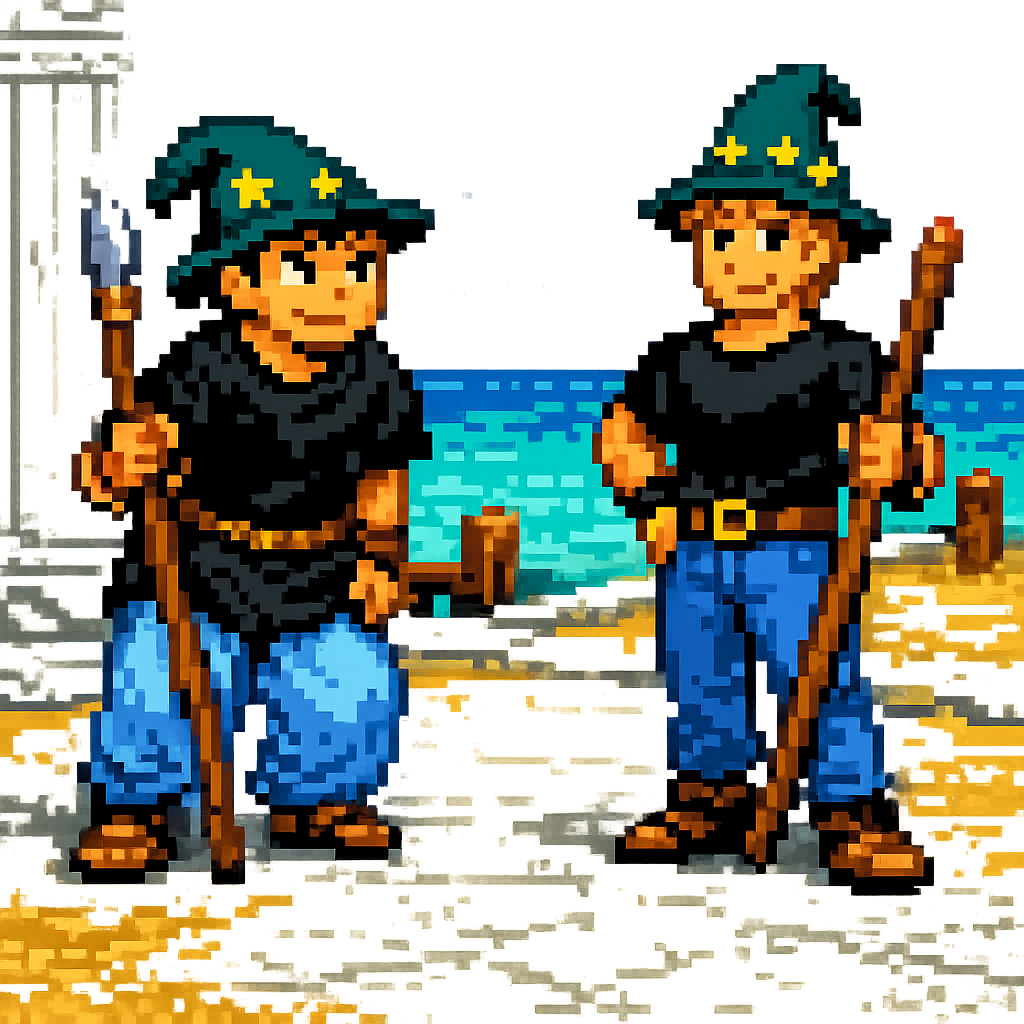
- Martin Banks. The protagonist, now a credentialed wizard rather than a fugitive. Same dark teal star-stitched hat, same black t-shirt under the cone, same dry self-deprecation — but with a year of consequences under his belt and an actual relationship he's trying to repair.
- Phillip. Newly elected chairman of the Leadchurch wizards. Martin's mentor and travel partner. The bickering between them is the comedic spine of the book.
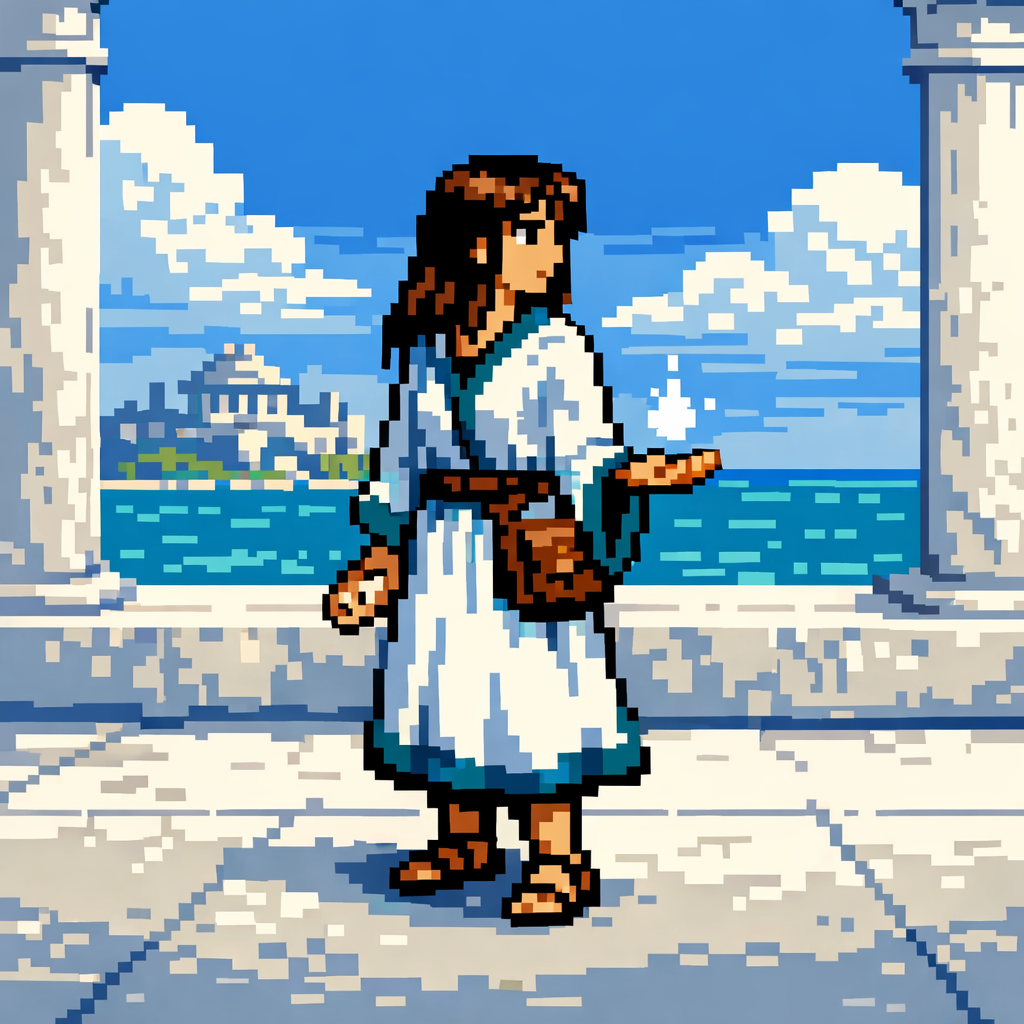
- Gwen. Time-traveler, formerly a Leadchurch seamstress, now in self-imposed exile in Atlantis. The book gives her real interiority for the first time and lets her have agency over her own arc.
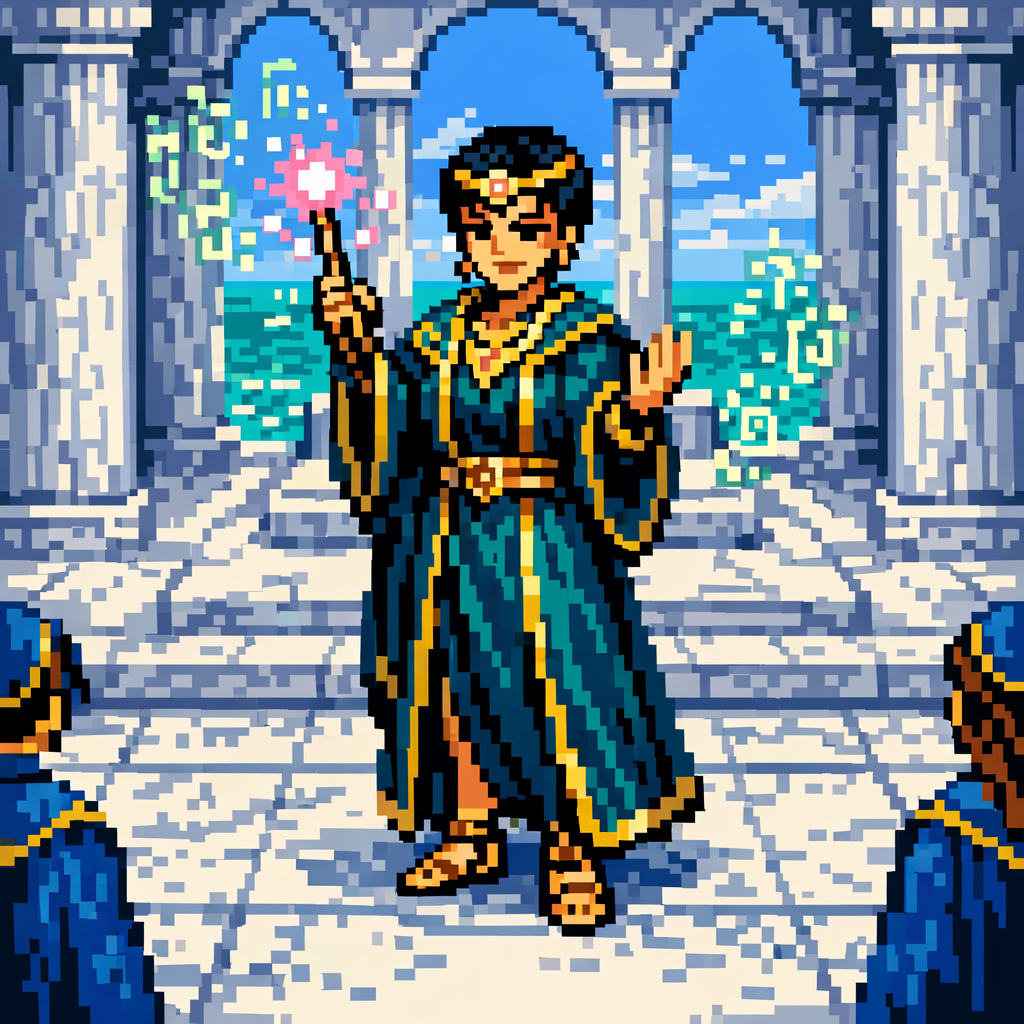
- Brit the Elder. Architect of Atlantis and head of state. Cool, regal, and quietly furious at having to be a bad influence on her own past.
- Brit the Younger. Brit the Elder's younger self. Same face, same body, same powers — and visibly resentful of being managed by a future version of herself.
- President Ida. The only elected official in the Atlantean triumvirate, the political face of the city. Polished, watchful, and not as straightforward as she presents.
- Jimmy. The exiled antagonist of book one, attempting his redemption arc in modern Seattle, very aware he is being watched.
- Agents Miller and Murphy. The federal Treasury duo investigating financial irregularities tied to a reality-hacker. Holmes-and-Watson energy at sprite scale.
Chapter guide
Spell or High Water runs roughly thirty chapters across four loose acts:
- Chapters 1–5 (Leadchurch prologue). The Rotted Stump after Jimmy's exile, Roy the newcomer, the summons from Atlantis, the jump out.
- Chapters 6–10 (Arrival at Atlantis). First sight of the city, meeting the triumvirate, the summit convenes, Martin tries to find Gwen.
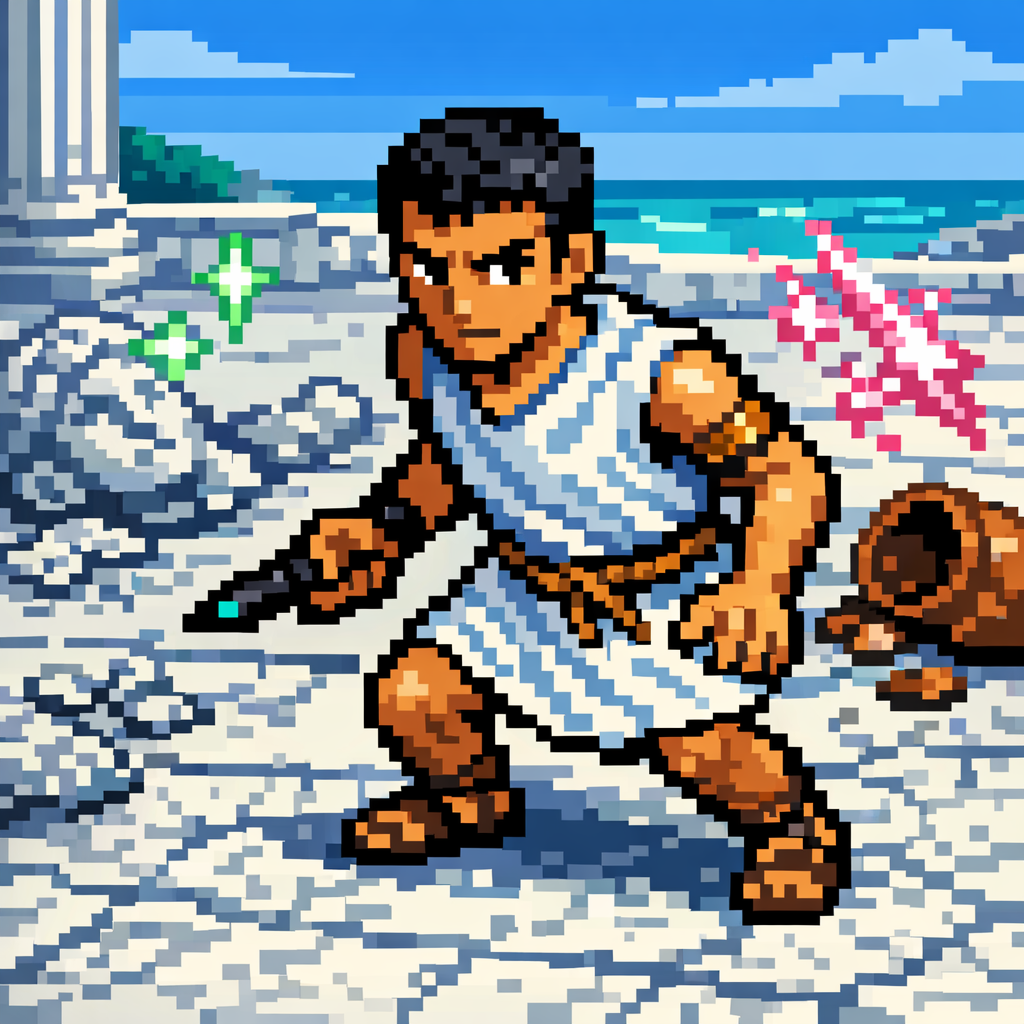
- Chapters 11–20 (Two plots running). The first cuts to Jimmy in Seattle, Ampyx the lovestruck guard, the falling statue, the federal agents close in, the submersible pod implosion, the discovery that the "accidents" are magical.
- Chapters 21–30 (Convergence). Investigation tightens, Martin and Gwen find their way back to each other, climactic plaza brawl, time-loop reveal, council reshuffle, and a beach farewell that hooks the rest of the series.
For chapter-by-chapter summaries with TL;DRs and book-club questions, see the individual chapter pages.
Major themes
The themes page goes deeper, but the big four are:
- Becoming the person you'll one day resent being. Brit the Elder is everything Brit the Younger is going to be — and she hates it. The book takes seriously what it would feel like to look at your future self and want to argue.
- Redemption is a thing you do, not a thing you're given. Jimmy's arc is the moral center of the book. The novel is clear-eyed about the fact that wanting forgiveness isn't enough.
- What "consent of the governed" looks like with godlike powers in the mix. Atlantis is a managed paradise. The book has thoughts about who decides what utopia is for, and who gets shut out of it.
- Romance after a screwup. Martin lost Gwen because of who he was. Whether he gets her back is genuinely uncertain, and the book treats the question as an adult problem rather than a romantic comedy beat.
Best discussion angles
Five questions that reliably ignite a book club:
- Brit the Elder and Brit the Younger are the same person. If you could spend a week with your own self from twenty years from now, would you want to? What do you think they'd want from you?
- Jimmy's redemption arc is built on him doing the work without expecting credit. How much of that is genuine change and how much is performance — and does the book think the difference matters?
- Atlantis is a sanctuary built by women, run by women, served by men. Is the book's framing of that arrangement satire, fantasy, both, or something else?
- Martin and Gwen's relationship was uncomfortable in book one on purpose. Did the book earn their second chance here, or did it shortcut the work?
- The book's villain has a personal grievance that the reveal makes oddly sympathetic. Where does the book stand on grievance-as-justification, and where do you?
Buy / borrow / listen
Coming soon — direct links to the publisher and major retailers.
Premium kit
A spoiler-aware character chart, deeper theme essays, and book-club discussion guide are available in the Page Posse premium companion.