
Chapter 36
The chapter in one sentence
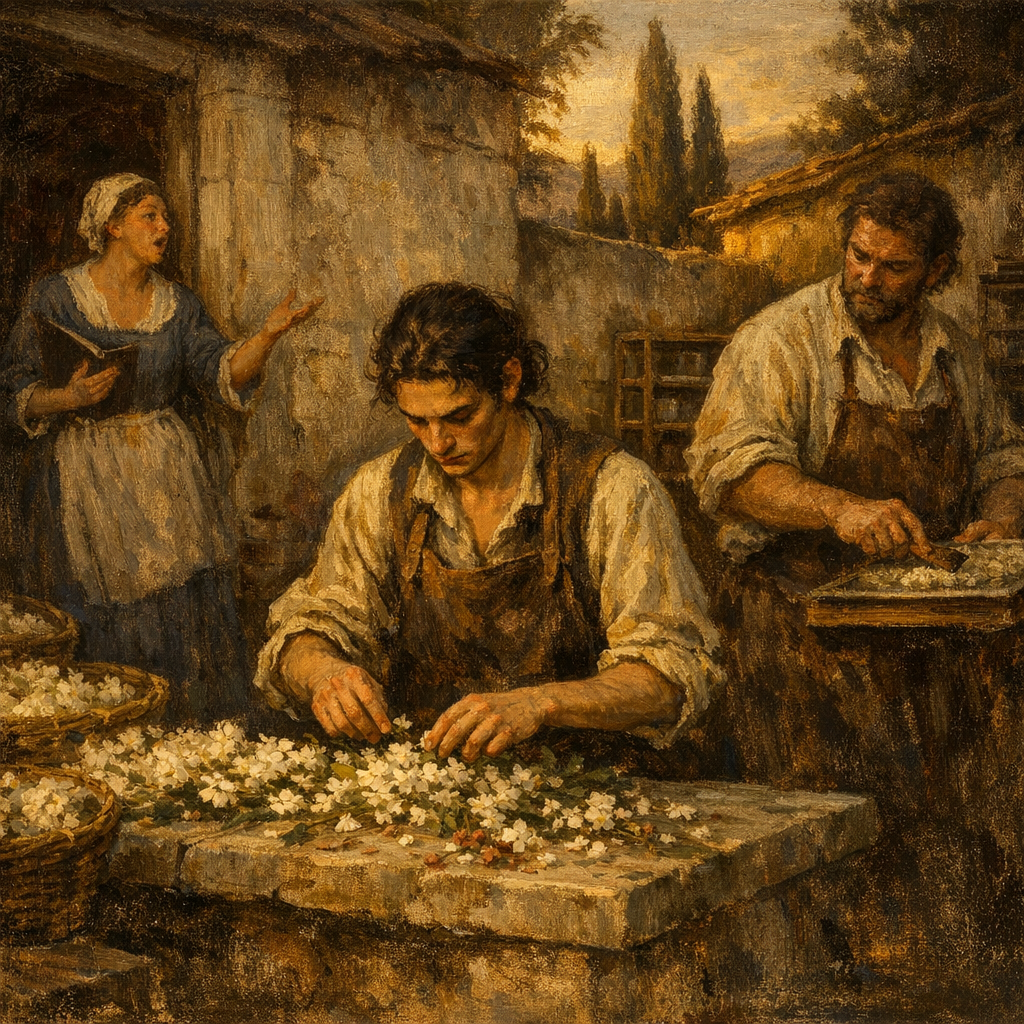
TL;DR: Grenouille perfects cold-fat enfleurage on the most delicate Provençal blossoms in the Arnulfi workshop, and — with the same clinical calm he brings to every other technical problem — decides to apply the same procedure to human skin.
Spoilers through Chapter 36.
The procedural decision that turns Grenouille into the murderer the rest of Part 3 will document, made silently in a workshop full of jasmine.
What happens
Dawn. The Arnulfi courtyard. Wicker hampers of jasmine and tuberose newly unloaded; copper kettles steaming through the open workshop door. Grenouille at the workbench sorting blossoms by freshness, his stained fingers flicking bruised petals aside. Druot at the right scraping pomade from a glass enfleurage plate with a small wooden palette knife. Madame Arnulfi at the workshop door calling something across the yard.
The chapter is procedurally calm. Grenouille is becoming, openly, very good at the trade. The stillness in his body, the prose reveals, is not patient apprenticeship. It is a kind of calm Grenouille has not felt since the plum girl: the calm of the next step arriving. He has watched the cold-fat technique extract scent from petals; he has perfected it; he is now, internally, making the inferential leap any chemist would make about what other surfaces this technique would work on.
The chapter does not yet stage a murder. It stages the deliberation.
Key moments
- The dawn unloading. Wicker hampers, jasmine, the worker's calm rhythm.
- The petal sorting. Grenouille's hands working through bruised blooms; a gesture the book grants quiet pleasure.
- The interior decision. Süskind grants no monologue. The decision is silent, complete, irreversible.
Character shifts
Grenouille becomes, in this chapter, a serial killer in intent. The first actual murder is one chapter away.
Why it matters
The chapter is the moment the book asks the reader to register that what is about to happen is technical, not passionate. The killings are the result of an inferential step taken in a workshop full of jasmine, not a moment of rage in a back alley. Süskind insists on the difference because the difference is, finally, the book's argument.
Themes to notice
- The artist as monster, the monster as artist — the artist's procedural reasoning is the same reasoning a serial killer would use, in this case, because the artist is.
- Smell as the sense reason can't argue with — and as the goal a man will reorder murder around.
Book club questions
- Süskind grants the decision no inner monologue. Does the absence of a moral struggle make the chapter more disturbing or less?
- The setting — fresh dawn, jasmine, copper kettles — is one of the book's most beautiful. Why stage the decision in beauty?
Visual memory hook
The dawn Arnulfi courtyard with wicker hampers of overlapping white jasmine and pale-pink rose, copper kettles steaming through the open door, and a small dark hunched figure at the bench with his hands moving carefully through the petals while behind his blank face the next decision arrives.
What's next
Chapter 37 is the first.