
Psilocybin
Psilocybin
TL;DR: The molecule at the book's center — a naturally occurring compound found in hundreds of mushroom species that produces, at sufficient doses, reliable ego dissolution, mystical experiences, and (in clinical research) lasting therapeutic change.
Spoiler-light. Covers what psilocybin is and does, as described throughout the book.
Snapshot
Psilocybin is a tryptamine compound found in roughly 200 species of fungi. It has been used ceremonially by Mazatec and other indigenous cultures for centuries, entered Western consciousness through R. Gordon Wasson's 1957 Life magazine article, and became the centerpiece of both the 1950s-60s research wave and its modern revival. In How to Change Your Mind, it is the primary subject — the molecule Pollan investigates, experiences, and ultimately argues deserves a serious place in medicine and our understanding of consciousness.
Role in the story
Psilocybin is simultaneously the object of scientific study, the subject of historical suppression, and the vehicle of personal transformation. Every thread in the book runs through it: the Hopkins research renaissance (Chapters 1 and 2), the natural history of mushrooms (Chapter 3), Pollan's own guided session (Chapter 4), the neuroscience of what it does to the brain (Chapter 5), and the clinical trials treating dying, addiction, and depression (Chapter 6).
What makes it distinct
Unlike LSD (synthetic, precise, associated with the counterculture), psilocybin feels, in Pollan's framing, organic — it comes from mushrooms, it has a ceremonial history, and the experience is often described as warmer and more embodied than LSD. It also has a longer research track record at this point, and it's the substance with the most robust modern clinical data. Pollan takes psilocybin twice: once informally, in a backyard, and once in a more structured underground therapeutic setting.
What it does
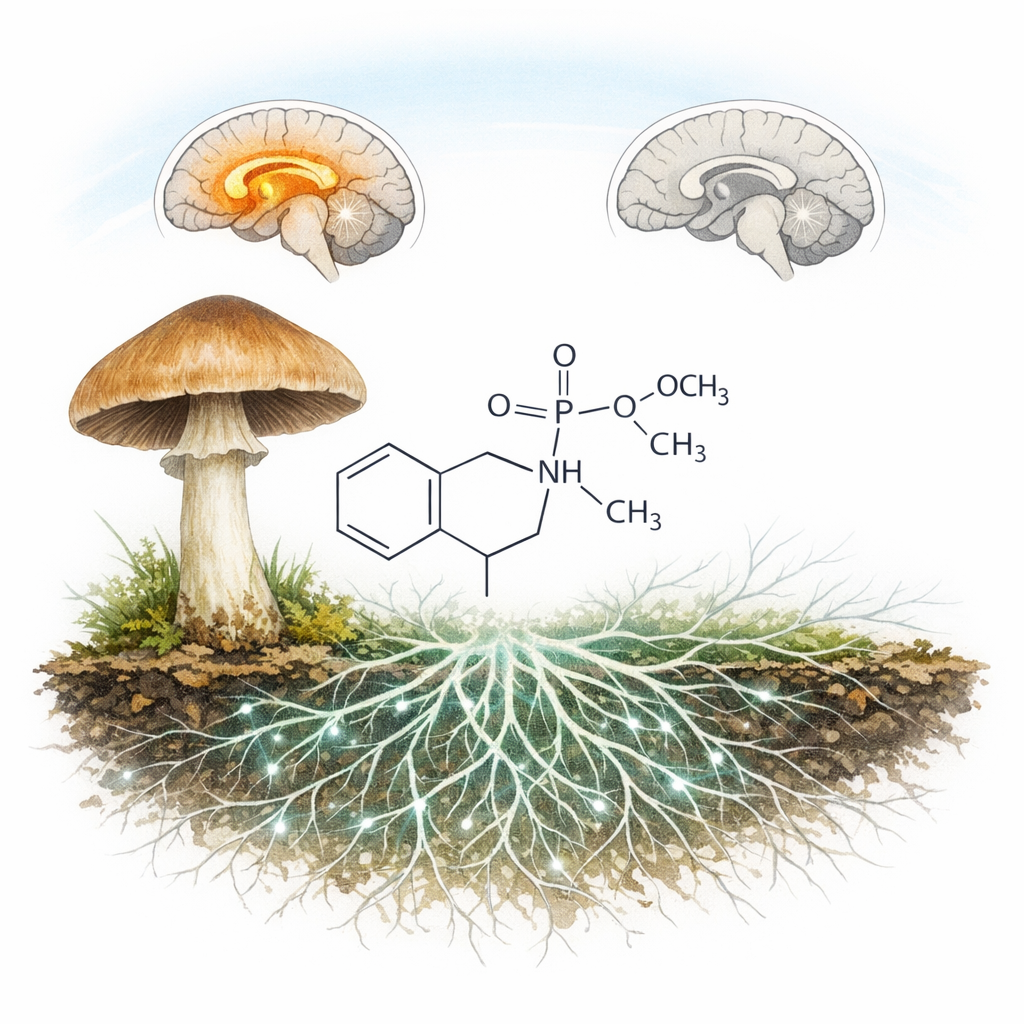
At sufficient doses, psilocybin temporarily suppresses the Default Mode Network — the brain's ego machine. The result is ego dissolution: the narrative self goes quiet, perceptions intensify, and many users report a "mystical experience" — a sense of unity, profound meaning, and the dissolution of the boundary between self and world. These effects typically last 4–6 hours. The lasting therapeutic benefits — reduced depression, smoking cessation, decreased cancer anxiety — appear to correlate directly with the depth of the mystical experience during the session.
Visual identity
A small brown mushroom cap, precise and unassuming. A white crystalline compound in a lab context. An fMRI brain scan with the Default Mode Network going dark. The molecule itself — a small, elegant chemical structure with outsized consequence.
Aliases
The following names and references in the book all point to this concept. Use any of these as link anchors back to this page.
- Psilocybin (canonical — the most common form)
- psilocin (the active metabolite after ingestion)
- magic mushrooms (popular name; Pollan uses sparingly)
Discussion questions
- Psilocybin evolved in mushrooms as a chemical signal to animal nervous systems — not as a therapeutic for human minds. What do you make of the fact that this accidental chemistry became one of the most studied therapeutic compounds in psychiatry?
- The book argues that the mystical experience psilocybin occasions is the therapeutic mechanism — not just a side effect. Does that change how you think about what "healing" means?
- Pollan makes a distinction between psilocybin's feel and LSD's — more organic, more embodied. Does this distinction matter, or is it just cultural packaging?