
Chapter 15— Linda Goes Quiet
Linda Goes Quiet
TL;DR: Harry can't reach Linda by phone, drives to her apartment, and finds the killer's signature again — Linda dead on her bed by the same chest-bursting working that killed Tommy and Jennifer, the room storm-still and the killer long gone.
Spoilers through Chapter 15.
In one sentence
The second body in the case and the chapter the rest of the novel will be measured against — Harry was close enough to save her and did not move fast enough.
What happens
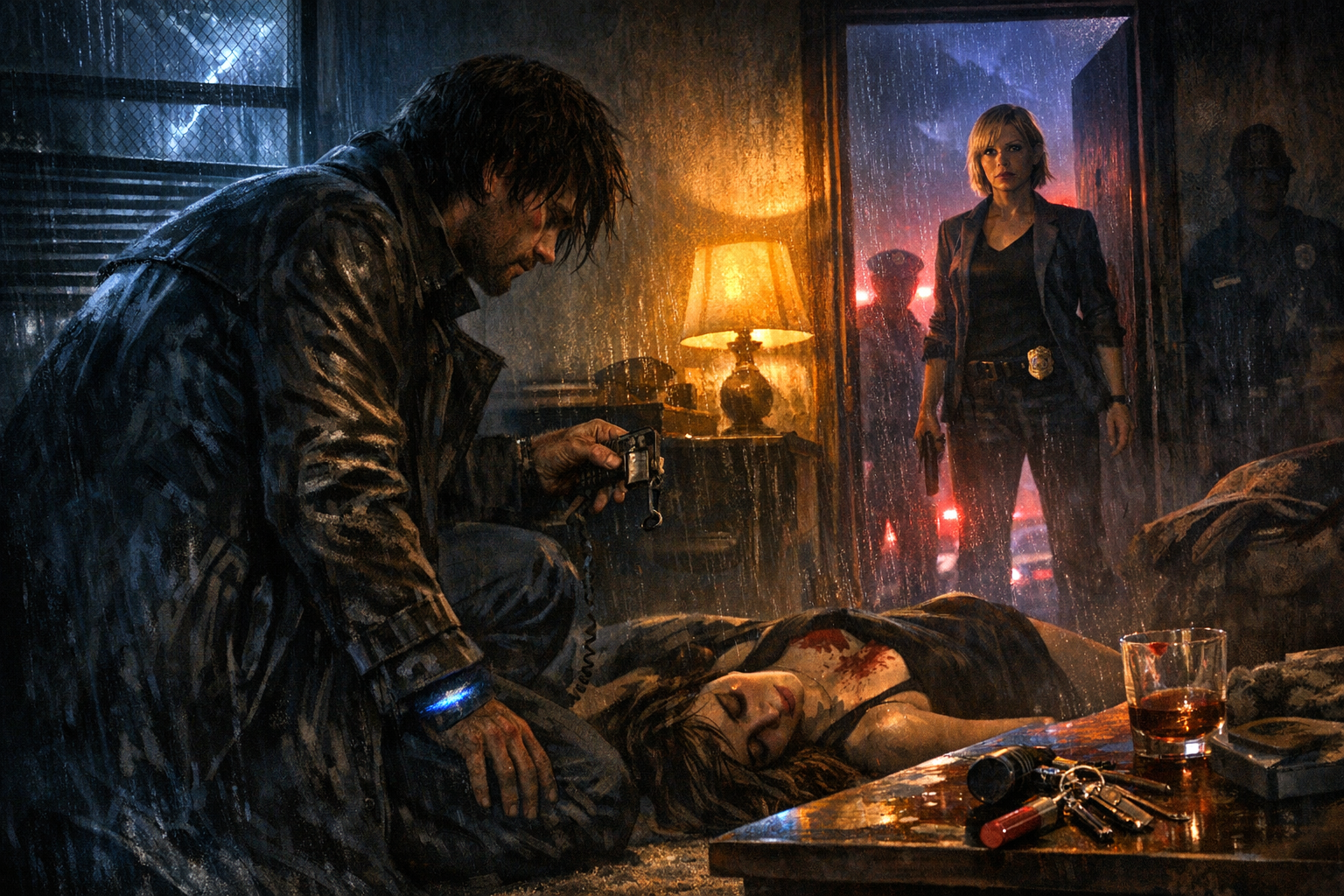
Harry tries Linda. The phone rings out. He tries again. He has been sitting on the chapter-fourteen intelligence and the chapter-thirteen evidence and could have called sooner. He goes to her apartment. The door is unlocked. The lamp is on a timer. Linda is in the bed in a tank-top and the cardigan she wore in chapter ten, and her chest is open and her heart is gone. The wound is identical to the Madison Hotel scene. The killer is not in the room. The killer was never in the room.
Harry calls Murphy from the apartment phone — there is no point pretending otherwise — and waits at the curb in the rain until the cruisers arrive. Murphy walks the scene. Carmichael is at her shoulder. The CPD reaction is colder than at the Madison because it is now clear, even to people who do not believe in sorcery, that they have a pattern, and the pattern points at a wizard, and the only wizard the CPD has on speed dial is the one standing in the rain.
Key moments
- The unlocked door. A small, devastating detail. Linda was either expecting someone or did not get a chance to lock up.
- The same wound. The book does not re-describe the gore. It does not need to.
- Harry calling Murphy. No attempt to manage the scene or buy time. The book wants you to feel that Harry is now done playing alone.
- Murphy's professional cold. She does not look at Harry the way she looked at him at the Madison. The trust is fraying.
Character shifts
Harry is wrong about timing, and the book lets him sit in that wrongness. Murphy is taking the case personally now. Carmichael has more reason to glare and more reason to be right. Linda is dead, and the book treats the death as a loss rather than a clue.
Why it matters
This is the chapter that takes the Madison murders out of "things that happen to strangers" and into "things that happen to people the protagonist knows." From here Harry has skin in the game in a way he did not before.
Themes to notice
- The detective who was almost in time. Genre tradition; Butcher honors it with no winking.
- The pattern as institutional pressure. Two bodies are a coincidence; three are a serial. Murphy now has to brief upstairs.
For your book club
- Linda's death is the consequence of a decision Harry made in chapter ten — to let her keep "thinking about" calling him. Is the book judging him for that? Should it?
- The chapter is shorter on description than the Madison scene. Why?
- Murphy's posture changes between chapters two and fifteen. Track exactly where the warmth leaves her voice.
Visual memory hook
A small apartment in the rain: a side-table lamp still on its timer-amber, a bed turned over with bloodied sheets, the smell of ozone and copper still in the air, an off-the-hook landline receiver dangling, a tall wizard at the bedroom doorway with one hand braced on the frame, sodium streetlamp halo on wet pavement outside, blue police-light flicker approaching from the end of the street.
Next chapter, no spoilers
Murphy needs answers tonight. Harry does not have the ones she wants.