
Chapter 12— The Lake Provence Cottage
The Lake Provence Cottage
TL;DR: Harry drives the Blue Beetle north to the Sells lake-house at Lake Provence for a daytime scouting run — quiet shore, expensive-but-modest cottage, no occupants visible — and confirms by Sight that recent magical work has been done in the building.
Spoilers through Chapter 12.
In one sentence
The chapter that turns the lake-house from a casual address Monica mentioned in chapter five into the location of the book's ending.
What happens
Harry drives north out of Chicago in the Blue Beetle, taking the long roads, looking for the property Monica named. The cottage sits on a stretch of private shore — neat, well-kept, a single dock, a screened porch on the water side, the kind of building bought by an upper-middle-class family that wanted a place to be alone. There are no cars in the drive. Harry parks well off and approaches on foot, ducking the sightlines from the road and the lake.
He does not break in this trip. He circles. He uses a careful pass of the Sight — eyes only, not full open — and confirms what he came for: there has been working here. The residue is faint, not fresh-from-tonight but recent. The lake is too quiet. The cottage is too ready. The chapter ends with Harry back in the car, the cottage still in his rearview mirror, knowing that the missing-husband case and the magical-murder case are not running in parallel — they are running through this one structure.
Key moments
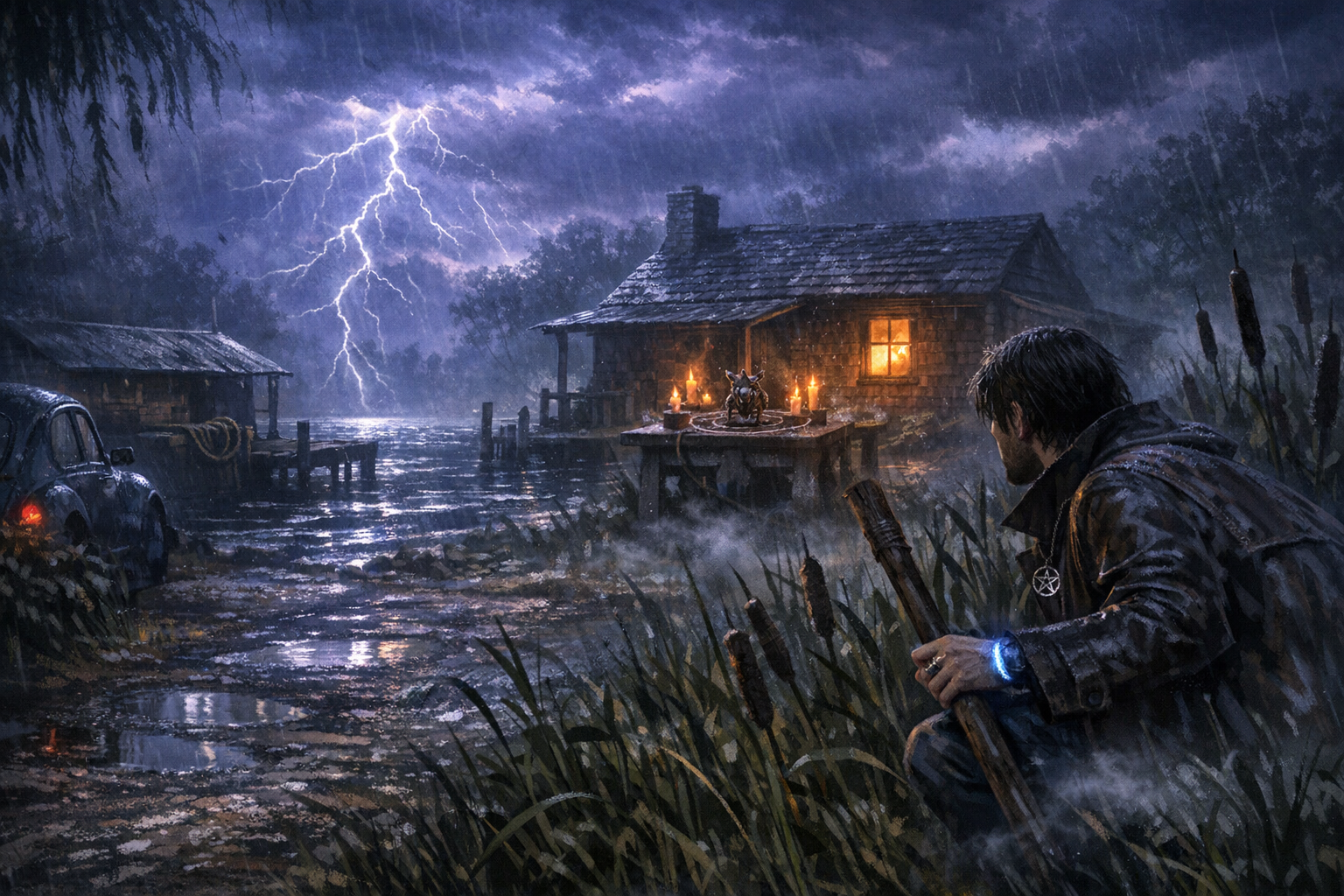
- The first sustained Lake Michigan scene. The book's storm-weather palette gets a daylight rehearsal. The opening cover painting is closer than it looks.
- The Sight, used carefully. The chapter shows you a wizard who has learned to dose his magical perception. Hard-earned restraint.
- The cottage as a tell. Tidy enough to mean someone is using it, empty enough to mean someone is using it for things they want unwitnessed.
- No confrontation. Harry leaves without setting foot inside. The book is patient.
Character shifts
Harry the investigator is on his game in this chapter — quiet, careful, smart enough not to break in. The novel is willing to spend twenty pages on professional competence and the chapter earns the spend.
Why it matters
The lake-house is now identified, scouted, and known to be magically active. From here, the back half of the book has a target, and so does the killer.
Themes to notice
- The cover of the book in chapter twelve. The Lee MacLeod painting on the original 2000 Roc paperback is exactly this cottage under this storm. The book is laying the climax's geography in front of you on purpose.
- Restraint as a virtue in this magical world. Harry could have done more here and chooses not to.
For your book club
- Harry scouts and leaves. A more impatient PI breaks in. What does Butcher want you to understand about competence by having Harry walk away?
- The lake-house was named in chapter five and is now the case. Track the speed at which casual details in Storm Front turn into plot mechanism. Where else does the book pre-place an answer in plain sight?
- A quiet scouting chapter at the structural middle of the novel. What does the slowing-down do for the book's pacing?
Visual memory hook
A private shoreline in afternoon light: gray water flat under a lowering sky, a neat cedar-shingled cottage with a single dock and a screened porch, no cars in the drive, a tall figure crouched in the tall grass at the edge of the property line with one hand shading his eyes, the Blue Beetle parked nose-out a quarter mile down the road.
Next chapter, no spoilers
Harry goes back, after dark, and the lock on the front door is not as serious as it looks.