
Chapter 1
Chapter 1 — "Character — Sweep the Sheds"
TL;DR: Two of the most famous rugby players on earth quietly sweep the changing-room floor after a Test match — because in this culture, no one is too big to do the small things.
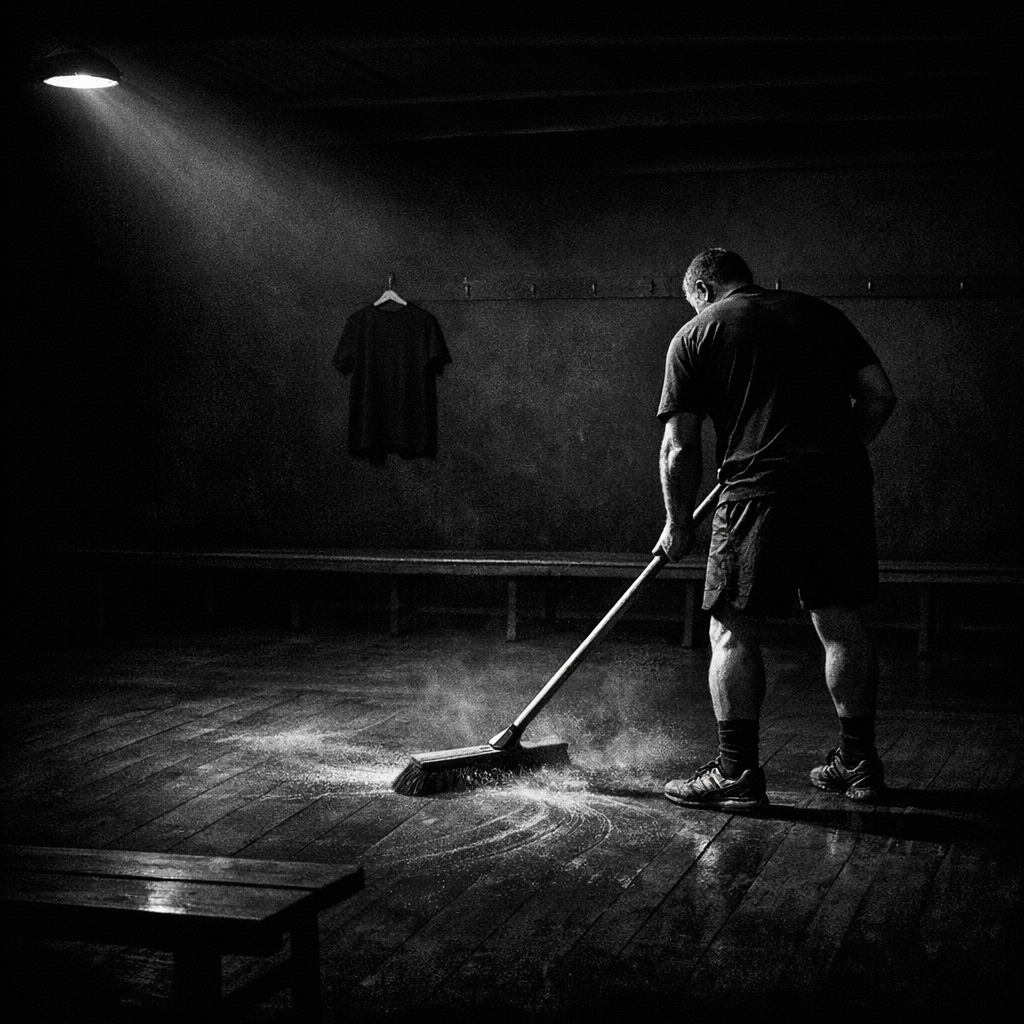
Summary: Kerr opens inside the All Blacks' changing room minutes after a Test win. Two senior players — Richie McCaw and Kevin Mealamu among the most-capped men in the sport — pick up brooms and sweep the dressing-room floor before they leave. This ritual, called "Sweep the Sheds," is the chapter's anchor image and its argument: humility is the operating system of the most successful sporting team in history. The lesson runs against the celebrity model of leadership; instead, character is shown to be hard-won daily practice, modeled top-down by senior players who refuse to be served by junior staff. Kerr threads in the Māori principle waiho mā te tangata e mihi — "let someone else praise your virtues" — and contrasts it with corporate hubris, ego cultures, and the moments when previous All Blacks teams (the 2007 quarter-final exit) lost their way through arrogance. The argument: when the people at the top do the lowest work, standards become contagious.
Key scenes:
- McCaw and Mealamu sweeping the changing-room floor after a Test, brooms in hand, the room otherwise emptied of cameras and journalists
- A senior player carrying his own kitbag past a young squad member, modeling "no servants, no stars"
- A brief flashback to the 2007 World Cup quarter-final dressing-room post-loss — silent, stunned, the moment that broke the old culture
- Kerr's Māori interlocutor explaining waiho mā te tangata e mihi — let others praise you
Characters present: Richie McCaw (captain), Kevin Mealamu, anonymous junior squad member, James Kerr (narrator/observer), an unnamed Māori cultural advisor (kaumātua)
Locations / settings:
- The All Blacks dressing room — fluorescent strip-light, painted white walls, lockers, a long wooden bench, a black jersey hung on a hook
- A tunnel back to the field, glimpsed as exit
Visual motifs: a single broom standing upright; sweat-darkened jersey on a hook; an empty bench under a single bare bulb; dust suspended in raking light; tape on the floor; a captain's kitbag carried alone; black void surrounding a single white object
Emotional tone: reverent, monastic, austere, quietly defiant
Confidence: high — the "Sweep the Sheds" ritual is the book's most-cited passage, corroborated across multiple sources.