
Al Hubbard First Wave
Al Hubbard and the First Wave
TL;DR: The enigmatic, contradictory millionaire who introduced 6,000 people to LSD in the 1950s and 60s — and the remarkable era of legitimate psychedelic research he helped create, and could not prevent Timothy Leary from destroying.
Spoiler-light. Covers the first wave as described in Chapter 3.
Snapshot
Al Hubbard was born in rural Kentucky around 1901-1902, made a fortune through a combination of invention, business, and possibly intelligence work, developed a mystical Catholic outlook, and somewhere in his 50s encountered LSD. He was transformed — and immediately devoted his considerable resources and personality to transforming others. Between 1951 and 1965, he introduced an estimated 6,000 people to LSD: politicians, business executives, academics, artists, military figures. He believed that meaningful change had to come from the top down, and he had the audacity to try to make it happen.
Role in the story
Hubbard is the colorful center of Chapter 3's historical narrative, but he represents something larger: the whole first wave of psychedelic research, from its remarkable promise to its catastrophic suppression. The arc of the 1950s-60s — genuine scientific breakthroughs, celebrity endorsements, Silicon Valley inspiration, Timothy Leary's recklessness, government crackdown — is the arc through which the book argues that important science can be lost not to its own failure but to its mishandling.
The first wave's achievements
Before the shutdown in 1966, first-wave researchers produced striking clinical results. Humphry Osmond demonstrated LSD therapy for alcoholism. Sidney Cohen documented therapeutic applications in upscale Los Angeles practice. Cary Grant publicly credited LSD with profound psychological transformation. Stewart Brand — later of the Whole Earth Catalog — had a Hubbard-guided session in 1962 that gave him the conceptual framework for computing as personal liberation. Early Silicon Valley engineers used LSD for design visualization. The research was serious, the results were promising, and then Sandoz withdrew LSD from distribution in 1966 and the FDA ordered roughly 60 research programs to stop.
Al Hubbard himself
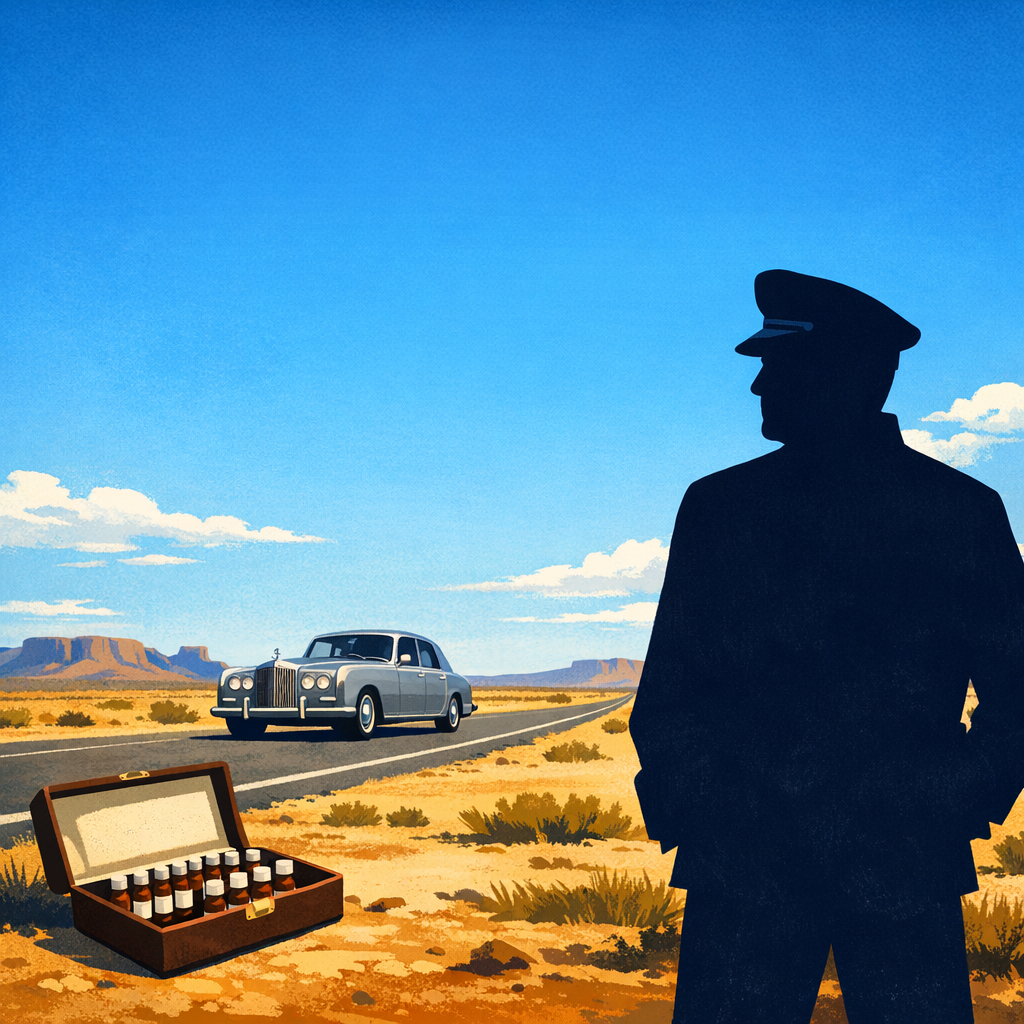
Larger than life in every sense: a Rolls-Royce to cross the country in, a captain's cap, a .45 pistol, a leather case full of Sandoz vials. He was deeply anti-Leary — not because he opposed transformation, but because he believed Leary's mass-evangelism approach was reckless and would provoke the political response that would end everything. He was right. He reportedly traveled to Cambridge to warn Leary directly. Leary didn't listen.
Timothy Leary and the crack-up
Timothy Leary is the book's cautionary counterpoint to Hubbard. A brilliant Harvard psychologist who had a genuinely transformative psilocybin session in Mexico in 1960, he built a research project — the Harvard Psilocybin Project — that was initially serious and then progressively lost to his charisma and grandiosity. He created a cult of personality among students, was fired after a scandal, declared war on American society ("Tune in, turn on, drop out"), and announced plans to turn on 4 million Americans by 1969. The government had the cultural ammunition it needed. By 1966, it used it.
Visual identity
A silver Rolls-Royce on a desert highway. A captain's cap against an enormous American sky. Brown Sandoz pharmaceutical vials in an open leather case. The scale of ambition expressed through landscape.
Aliases
The following names and references in the book all point to this concept/person. Use any of these as link anchors back to this page.
- Al Hubbard (canonical — the most common form)
- Hubbard
- Captain Trips (his nickname among researchers)
- the First Wave (when used as historical-era reference)
Discussion questions
- Al Hubbard's top-down strategy — targeting elites rather than the general public — is the opposite of Timothy Leary's democratic approach. Which strategy was right, given what actually happened? Which would be right today?
- The book argues that Timothy Leary essentially destroyed legitimate psychedelic research single-handedly. Do you find that convincing, or does it let the government and pharmaceutical industry off the hook?
- Stewart Brand's Hubbard session allegedly led, indirectly, to the first Earth-from-space photograph and the Whole Earth Catalog, which influenced the personal computing revolution. What do you make of that particular chain of events?