the-witch
The Witch (Old Woman) — Character Guide
Name
- Canonical: The Witch / The Old Woman
- Aliases: none specified
- Fairy-tale source: Hansel & Gretel (the witch in the candy house)
Role in the story
Gretel's captor in Week Four — the old woman who fed her and her brother sweets to fatten them before the iron oven. In the book she is rendered as memory rather than person: Gretel doubts whether the witch was a witch, whether she was an old woman, whether she existed at all. She lives in the chapter as an outline.
Personality / energy
Hospitable on the surface — the table set, the candle lit, the food offered. Underneath: appetite. She is the shape an appetite takes when memory tries to file it away.
Physical description
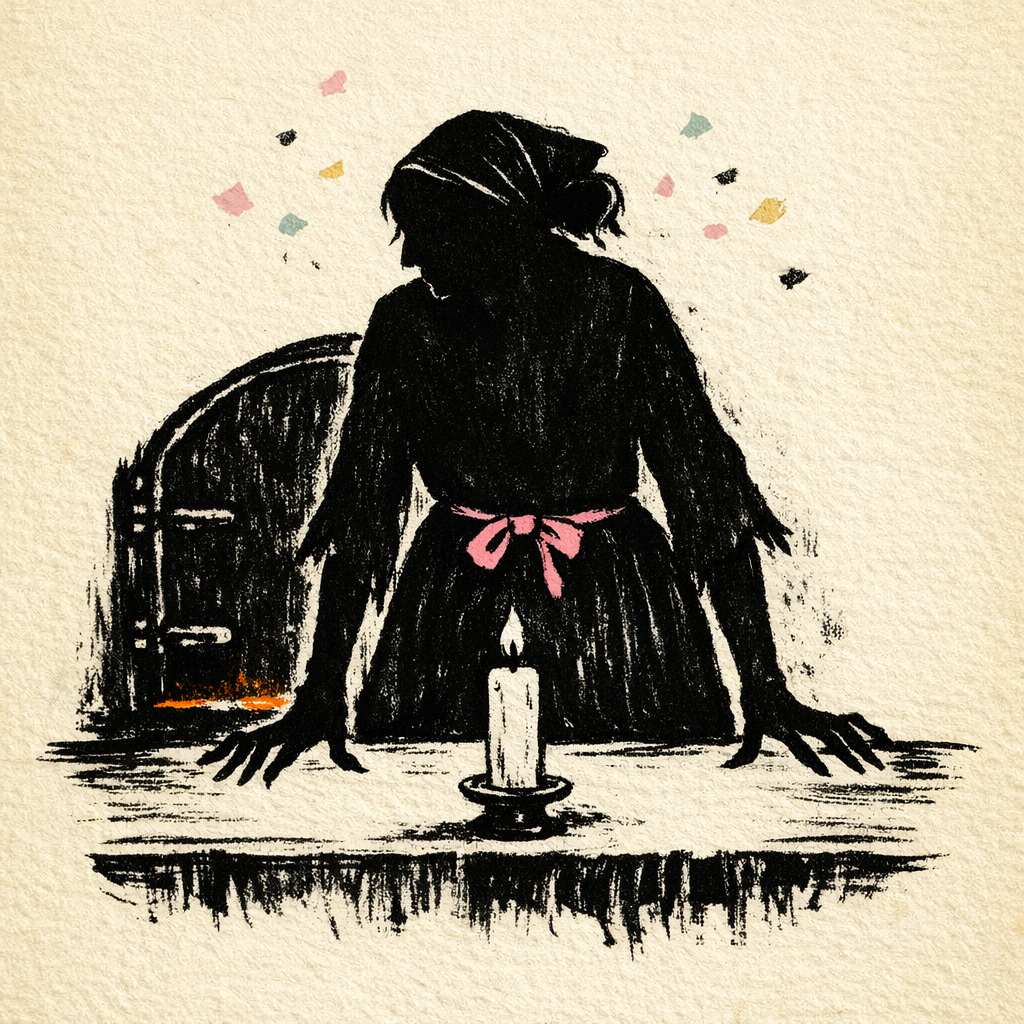
Silhouette only. A bent / stooped feminine figure rendered as a black ink shape against pastel-sugar fragments. Long-fingered hands faintly visible at the cuffs of a long dark dress. No face, by deliberate art-direction choice — Gretel does not remember her face, and the visual treatment honors that.
Outfit / clothing notes
- A long, dark, plain dress — silhouette only.
- Possibly an apron tied at the waist (a sugar-pink ribbon, single accent — the only soft color on her).
- Hair pinned up under a kerchief, again silhouette only.
Visual motifs
- Silhouetted bent figure at a long table.
- A single tall white candle on the cloth.
- An iron oven with a hairline crack of orange light at the door, behind her.
- Long-fingered silhouette hands.
- Sugar-pastel cottage fragments suspended in the air around her.
Magic / power signature
Implied rather than rendered — the candy walls, the oven heat, the children-in-the-corner geometry. The chapter does not show her casting; it shows the room she made.
Chapter appearances
- Week 4 only.
Source references
Hansel & Gretel fairy-tale source; Hachette jacket copy ("Gretel questions her memory of being held captive in a house made of candy"); the book's overall preference for silhouette over portraiture.
Confidence
Medium — silhouette-only treatment is a deliberate choice consistent with Gretel's memory-unreliable testimony and with the book's cover-DNA aesthetic, rather than a verified description from the text.